I've been thinking a lot about boundaries lately. The lines we draw between ourselves and others, between human and machine, between what's "natural" and what's constructed. These thoughts led me back to Donna Haraway's groundbreaking "A Cyborg Manifesto," and I found myself wondering: haven't we all become the cyborgs she envisioned?
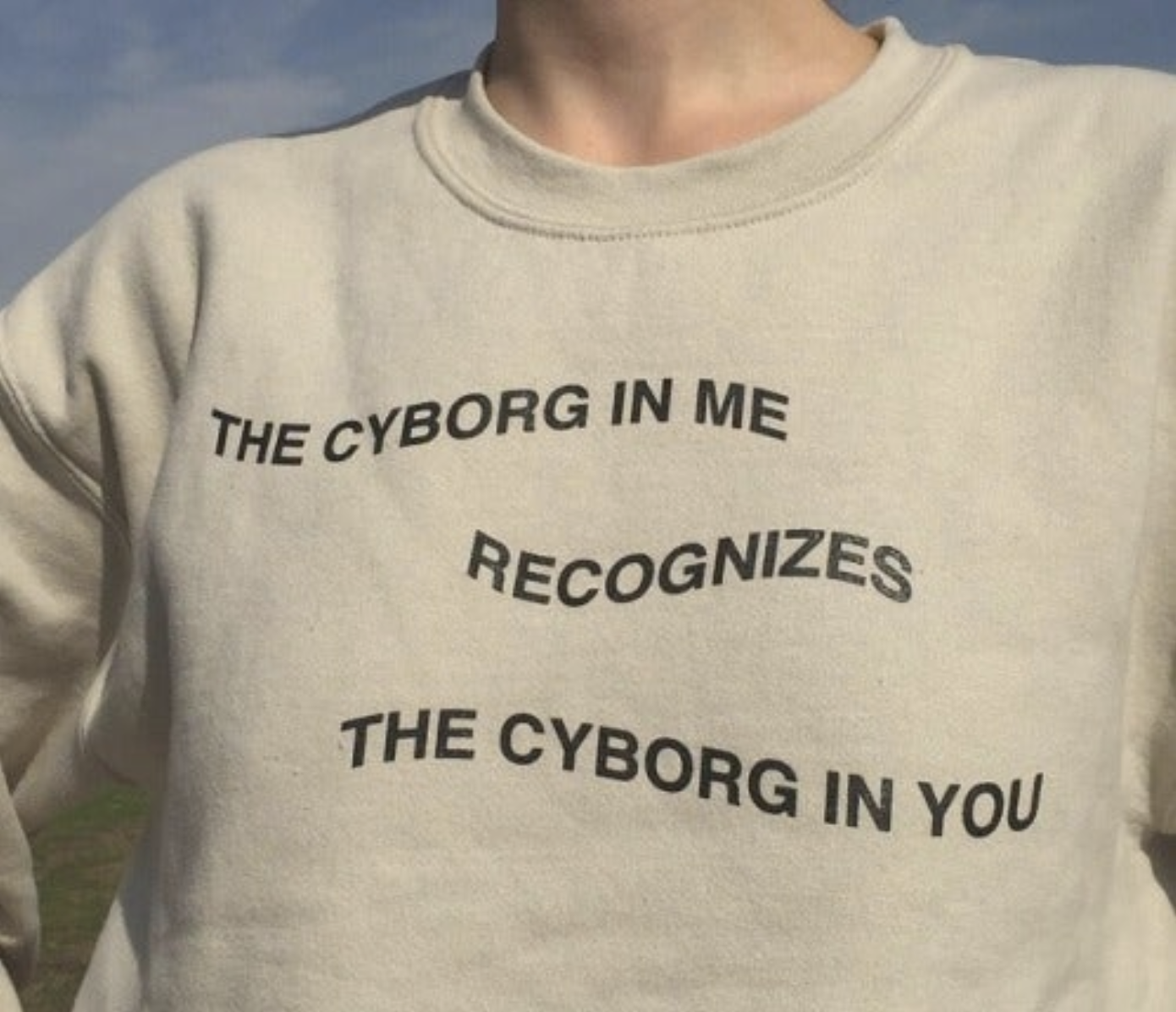
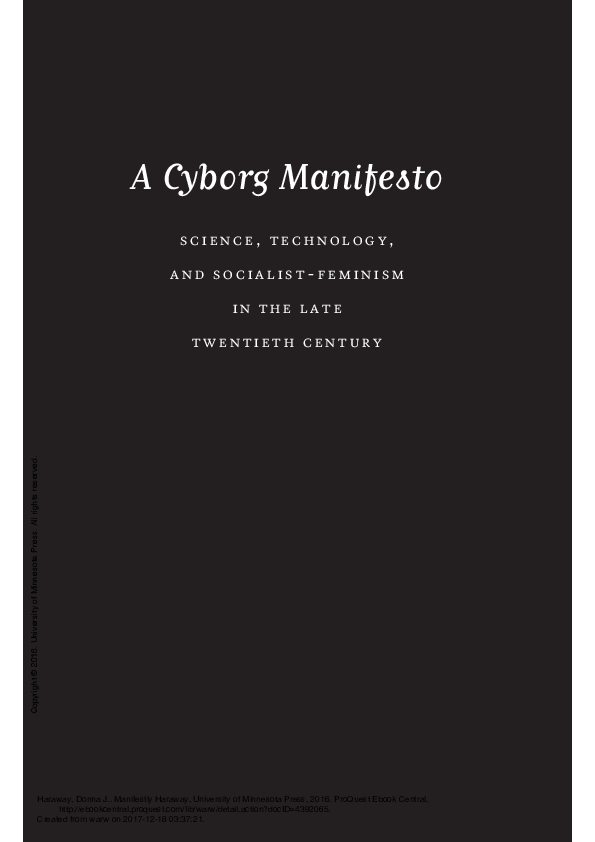
Look around you. How many devices are currently extending your capabilities? The smartphone that remembers for you, the algorithms that curate your world, the medical technologies that might be keeping you or loved ones alive. We are all "chimeras, theorized and fabricated hybrids of machine and organism" whether we acknowledge it or not.
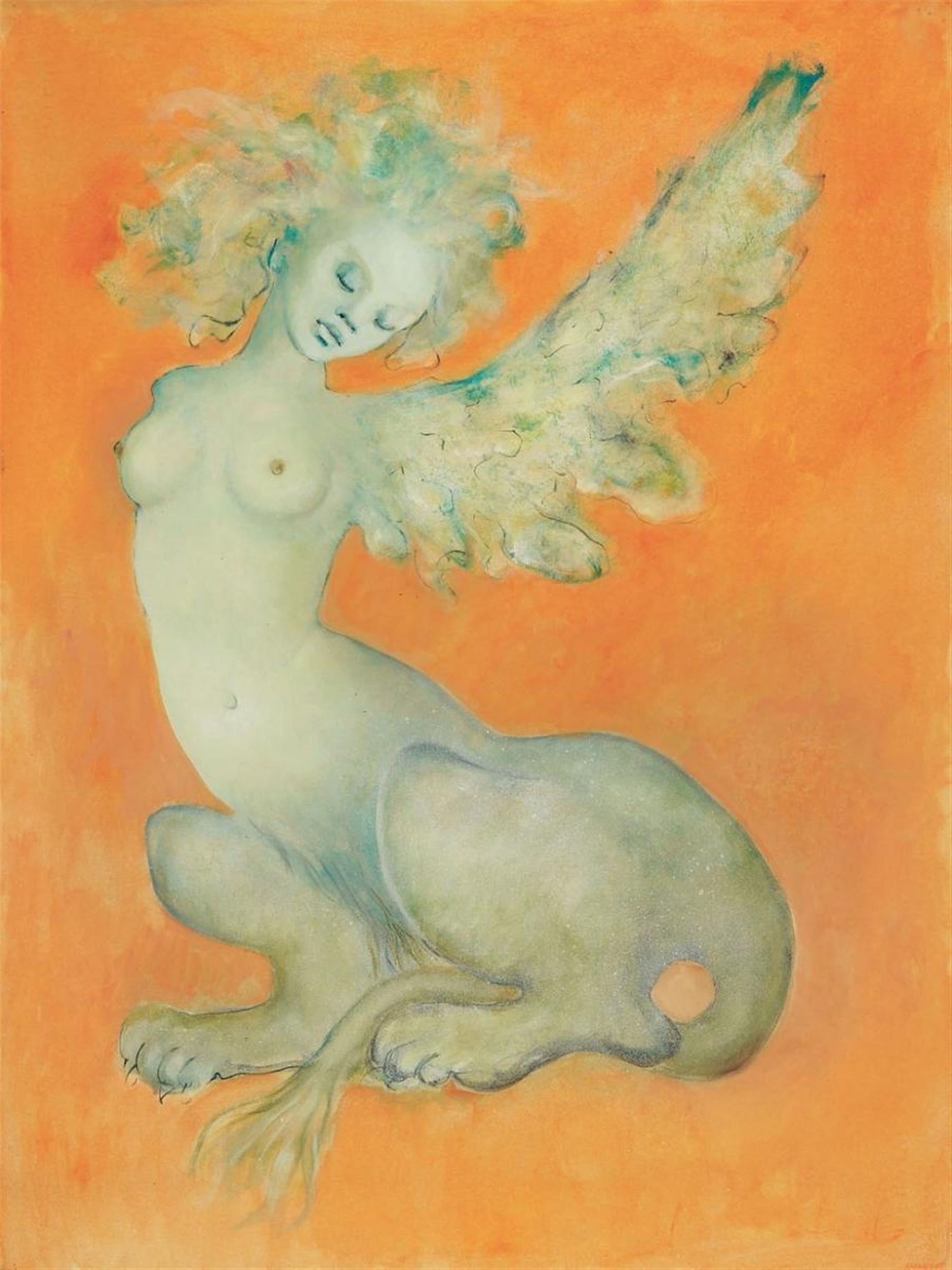
The Cyborg as Our Mirror
Her work was prescient. Written in the 1980s, before the internet transformed our daily lives, she already saw that "the boundary between physical and non-physical is very imprecise for us". She also puts it poetically “Our best machines are made of sunshine; they are all light and clean because they are nothing but signals, electromagnetic waves, a section of a spectrum, and these machines are eminently portable, mobile […] People are nowhere near so fluid, being both material and opaque. Cyborgs are ether, quintessence.”
Furthermore, the power of Haraway's cyborg metaphor isn't just in describing technological integration, but in offering a way to think beyond rigid categories that have structured Western thought. The cyborg "skips the step of original unity" and offers no origin story. It doesn't yearn for wholeness or completion. Instead, it embraces "partiality, irony, intimacy, and perversity".
I find this liberating. The cyborg refuses clear beginnings. It doesn’t look for purity or completeness. Instead, it makes space for being in-between—for contradiction, for closeness, for mess, for still becoming.
The cyborg doesn’t offer answers and challenges how we think. It opens up new ways to imagine ourselves. Maybe that’s what we need.
Beyond Essential Identities
Haraway's critique of identity politics feels even more relevant today. "There is nothing about being 'female' that naturally binds women," she reminds us. "Gender, race, or class consciousness is an achievement forced on us by the terrible historical experience"
I feel this deeply - the limitations of being defined by singular aspects of identity. The cyborg offers a different vision, one of "fractured identities" and "contradictory standpoints". It suggests we might build connections not through sameness but through conscious coalition. Affinity, not identity.
In our social media age, where identity often becomes performance and politics frequently reduces to tribal affiliation, Haraway's vision of coalition-building across difference feels like a path forward. What might it mean to form alliances based not on who we inherently "are" but on what we collectively want to create?
Living in the Integrated Circuit
Perhaps most memorable is Haraway's description of the "informatics of domination" - the shift from hierarchical structures to networked systems of control. Her chart contrasting old and new forms of power reads like a blueprint for our current reality:
From "Representation" to "Simulation"
From "Depth, integrity" to "Surface, boundary"
From "Public/Private" to "Cyborg citizenship"
We live in this world now, where control operates through codes, algorithms, and data flows. Where our bodies and identities are increasingly treated as "biotic components" that can be disassembled and reassembled.
Yet Haraway doesn't simply condemn this reality. She sees potential for resistance within it. The cyborg is "the illegitimate offspring of militarism and patriarchal capitalism", but like many illegitimate children, it might prove "exceedingly unfaithful to their origins".
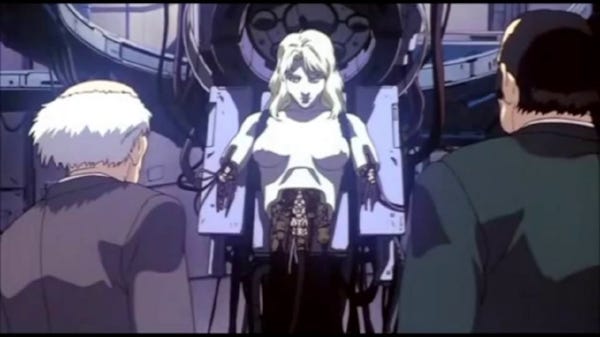
Reading Haraway was challenging, and honestly, I’m still not sure I fully grasped her essay. So often, the thread I held onto was irony.
Nonetheless, there was a strange comfort in imagining myself as a cyborg.
I’ve often found myself swinging between uncritical enthusiasm for technology and deep unease. The figure of the cyborg offers a third way: a mode of critical engagement that doesn’t deny the dangers, but also doesn’t dismiss the possibilities.
Being hybrid is an opening. A chance to reimagine connection, identity, and creation. It means recognizing that the boundaries between me and my devices, between my inner world and the algorithms shaping it, were never as solid as I believed.
There’s a kind of freedom in embracing partiality - letting go of the illusion of purity or completeness. As Haraway writes, “with the loss of innocence in our origin, there is no expulsion from the Garden either.”
Perhaps that's the most powerful aspect of Haraway's vision - not just describing our technological present, but offering a myth that helps us navigate it with creativity and hope. In a world of dissolving boundaries, the cyborg teaches us to find pleasure "in the confusion of boundaries" while taking "responsibility in their construction".
Aren't we all cyborgs now? And if so, what worlds might we build together?

